
Please choose your local Vodacom website
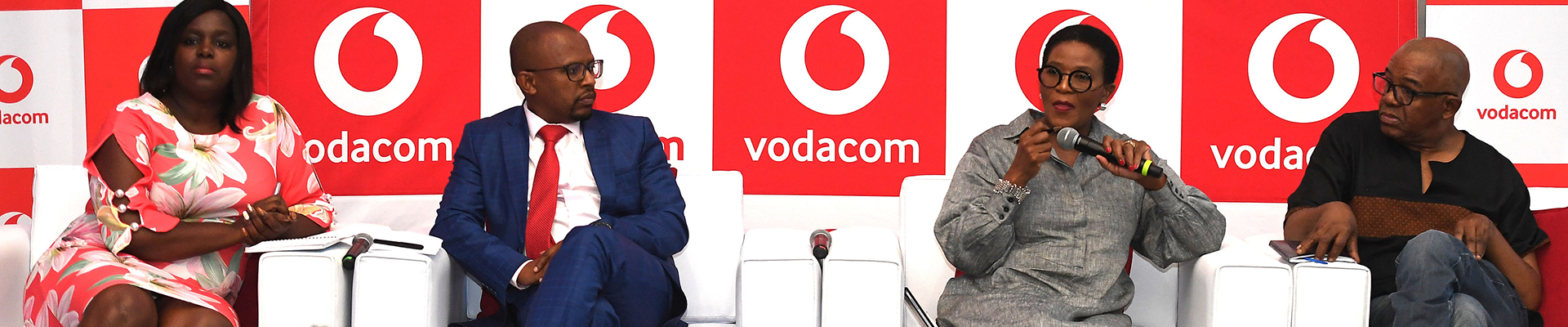
The Privatisation Unit of Lesotho and the Sekha-Metsi Consortium Ltd yesterday signed a Sale of Shares Agreement resulting in the latter gaining a 12% shareholding in Vodacom Lesotho (Pty) Ltd.
The Government of Lesotho began its privatisation process last year and invited bids for the Lesotho Telecommunications Corporation's shares in Vodacom Lesotho (Pty) Ltd. The Sekha-Metsi Consortium Ltd was identified as the successful bidder in July 2000.
"Vodacom is delighted with its new partner and is negotiating a shareholders agreement with Sekha-Metsi that includes rights to increase their shareholding to 20%," said Andy Moqhali, Managing Director of Vodacom Lesotho (Pty) Ltd.
"Vodacom is looking forward to the new energy that Sekha-Metsi will bring to Vodacom Lesotho and the benefits this will have for the country's telecommunications infrastructure," said Mr Moqhali.
Mr Moqhali said that the number of cellular users in South Africa overtook the number of fixed-line subscribers in mid-2000 and Vodacom was concentrating on achieving the same scenario in Lesotho. There are currently about 21 000 fixed-line subscribers against almost 19 000 cellular users Lesotho.
"This is a realistic scenario when one considers that Lesotho`s economy is turning around following a slump caused by the 1998 political uprising. The Lesotho Finance Ministry is predicting a growth rate of about one or two percent," said Mr Moqhali.
In June 1995, Vodacom was awarded a GSM licence in Lesotho. A partnership was set up with the Lesotho Telecommunications Corporation to build and operate a network. The test phase started in September and the network officially switched on in May 1996.
The GSM 900 Megahertz network currently covers the towns of Hlotse, Teyateyaneng, Maseru, Marija, Mafeteng, Roma and Likalaneng.
Vodacom also operates a Tanzanian cellular network with almost 50 000 customers, having commenced commercial operations in September this year.
"Vodacom believes it makes sense for telecommunications in Africa to be provided by means of the latest digital cellular technology. When the cost and time taken to lay cables in Africa's underserviced areas is taken into account, cellular makes more sense. Radio is expensive in terms of the initial set-up costs, however the roll-out can take place far quicker," concluded Mr Moqhali.




 Lesotho
 Tanzania (EN)
 DR Congo
 Mozambique
 South Africa
